Mandopop Monday: Big Bowl, Thiccc Noodles 👀👌

This week’s Mandopop Monday is dedicated to Kris Wu and his recent guest mentoring stint on Produce Camp 2020.


Who is Kris Wu?

Kris Wu is a popular Chinese idol. He first achieved fame as one of four Chinese members in EXO, a highly successful South Korean boy group. However, in the first of the many controversies his career would see, he abruptly left the group in 2014 to pursue a solo career in China focusing on rap and subpar acting. (Don’t @ me, EXO fans, he was my bias back in the day so I say this with love.)
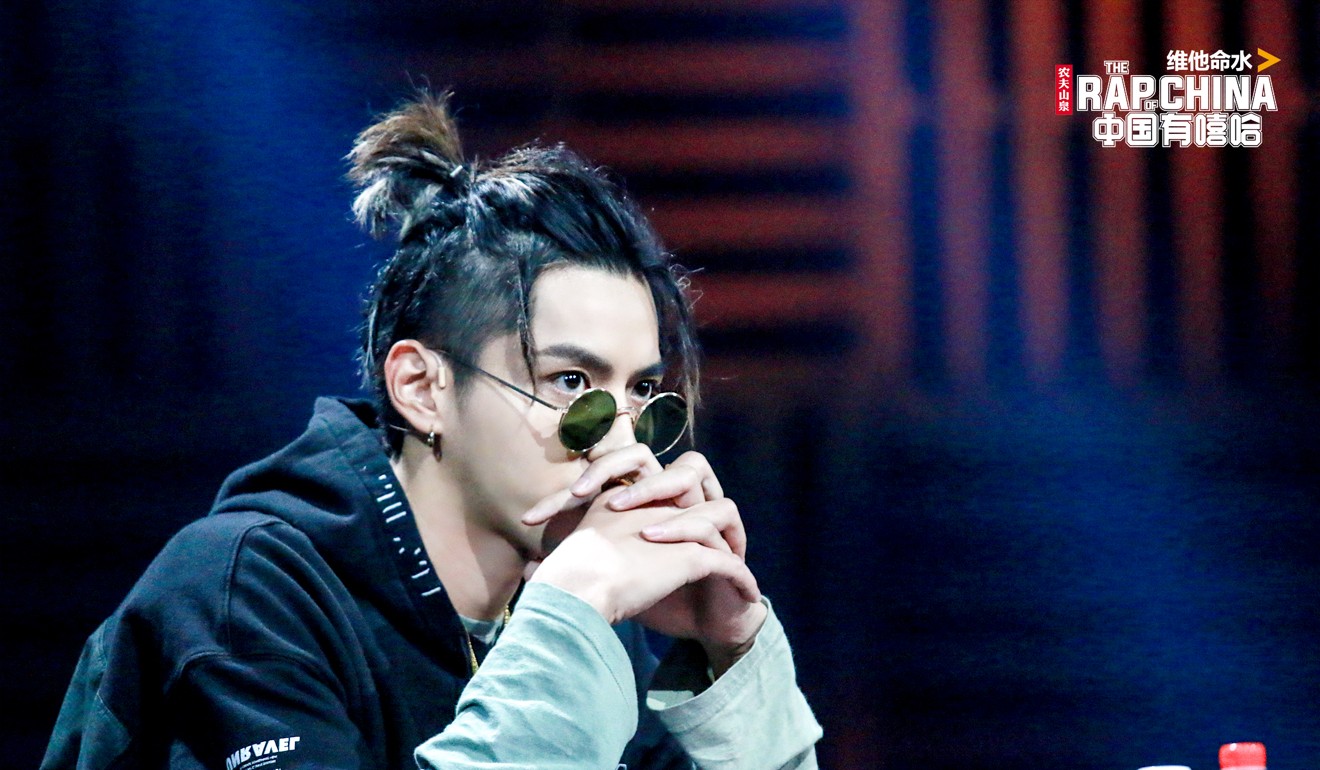
Kris Wu looking contemplative in his sunglasses, which he always wore indoors on Rap of China because… I don’t know? To look more “hip hop”, I guess??

For the first few years, he seemed destined for the fate of most Chinese idols – extreme popularity in the early years, capitalized upon by TV producers who would cast him for their mediocre dramas, and then gradual irrelevance as fans moved on to the next young, hot thing. However, Kris managed to break out of this cycle in 2017 when he took a spot as a mentor on a new rap competition show called Rap of China. It was a novel concept, because rap was still very much an underground genre in China at the time. But to everyone’s surprise, Rap of China became a huge commercial success, boosting rap’s status overnight from ignored by most, to mainstream musical genre.

Kris Wu’s status shifted, too – where he once was “just another pretty idol,” he now became “still a pretty idol, but one who can sorta* rap.” All things considered, this was a pretty successful event for his career. Maybe that is what inspired him to try mentoring on other competition shows, such as Produce Camp 2020. (Just kidding, he was probably inspired by money – lots and lots of it – but I needed something to transition to the next topic.)

*He’s actually not bad at performing rap songs if they’ve been pre-written, but the boy really cannot freestyle. More on that in a sec.


What is Produce Camp 2020?

This is the third season of Produce Camp, yet the style concept still looks the exact same as all previous seasons. Come on, Tencent. Think of all the ways you could be more creative with spending your buckets of money.

Produce Camp 2020 is a survival show produced by Tencent* in which 101 female contestants compete for the chance to debut in a girl group. It’s worth noting that Produce Camp itself is competing with another similar survival show on iQiyi** called Youth With You 2, which started airing a few weeks before Produce Camp. General consensus seems to be that people enjoy Youth With You more, due to its quirky contestants and the wholesome relationships they have with each other.

However, despite having a late start and being less interesting, Produce Camp is still doing pretty well in ratings – and this is likely thanks to the celebrities who were brought on as mentors on the show. In particular, mentors Luhan, Huang Zitao, and Kris Wu are all known in China as 流量明星 (liúliàng míngxīng, “traffic” celebrities), because they each have millions of rabid fangirls who will drive high traffic to their TV shows.

*Tencent: Sometimes jokingly referred to as 腾讯爸爸 (Téngxùn bàba, “Daddy Tencent”), Tencent is a giant tech company in China that owns WeChat (a social media app similar to Facebook, but way better and way more powerful), and several very profitable games, such as League of Legends and Fortnite. In conclusion, they make bank.

**iQiyi: One of the biggest streaming websites in China. Despite being such a juggernaut in the streaming space, they’re not nearly as rich as Tencent – in fact, they’re bleeding giant piles of money 😂

From left: Luhan, Kris, and Huang Zitao in their first appearance together on Produce Camp 2020. Don’t ask me why Luhan is wearing that outfit; maybe he was going for that “sexy plumber” look?

What makes this particular combination of “traffic” celebrities even more special, however, is the fact that all three are former members of EXO. Kris was the first to leave the group, sparking rumors that the remaining members (especially Huang) had broken ties with him. Luhan and Huang Zitao eventually followed Kris’s footsteps and left the group as well, but in the subsequent years there was very little interaction between the three former members and fans had no idea whether their relationship was ever patched.

Kris’s guest appearance last weekend on Produce Camp 2020 marks the first time he, Luhan, and Huang Zitao have stood together on one stage since their days in EXO, so naturally this drove up traffic from many people who wouldn’t have normally watched the show (including yours truly). Daddy Tencent probably spent a lot of money to get these three on the show, but I wouldn’t be surprised if it pays off in the end. To cap things off for the fans (and make sure they stay committed to the show), the Tencent producers made sure to include lots of gratuitous fan service moments, including a performance of Kris’s song, “Big Bowl, Thick Noodles.”

Honestly, as much as I love this song, this performance was kinda boring. I give it a C+.

… Big Bowl, Thick Noodles?

This song originated from a meme, specifically a meme making fun of Kris. During the first season of Rap of China, Kris went viral for his catchphrases on the show, one of which was “你有freestyle吗? Can you freestyle?” He asked this question to virtually every contestant after they performed for him. Now, maybe Kris just really wanted to emphasize the importance of freestyling in rap culture, but some critics believed it showed his lack of real knowledge about rap – he didn’t know what sort of commentary to give the contestants, so he just defaulted to “Can you freestyle” every single time.

Regardless, Kris’s own freestyling skills were soon put to the test on another TV show when he was asked to freestyle for guests at a restaurant. What resulted was… something to behold.

Here’s a translation from Radii China:

Are you ready or not? / look at these noodles / they’re long and broad / just like this bowl / big and round / you came here to eat food / think the food’s tasty / I think it’s great / you came here to eat food / you’re as happy as me when I pull these noodles for you / hey hey hey

This clip went viral for its epic awkwardness and soon, Chinese social media was dominated by memes and TikToks about “thick noodles” and “big bowls”. Despite the initial boost from Rap of China, Kris’s legitimacy as a rapper was pushed to an all-time low.

But! Amazingly, Kris managed to flip the situation on its head a year later when he turned his disastrous freestyle into a studio single, and a total bop at that. Pleasantly surprised by this turn of events, the Chinese internet applauded Kris for his self awareness and praised the song for being rather catchy. It even sparked an uptick in noodles sales on delivery apps. This song of redemption, named 大碗宽面 (dà wǎn kuān miàn, “Big Bowl, Thick Noodles”), is the song that those contestants performed on Produce Camp 101, and it is today’s Mandopop Monday selection.

Quick note: This song also counts as zhongguo feng – the hook is in a pentatonic scale, the lyrics reference the martial arts world (江湖 jiānghú) multiple times, and the traditional instrument guzheng is featured prominently throughout the song, including in the opening notes and hook.

Mandopop Monday: 知否知否 Don’t You Know?

I was originally going to start off Mandopop Mondays with a new song that I recently became addicted to, but then I saw this article by SupChina and felt inspired to instead pay tribute to Li Qingzhao, one of China’s greatest poets. It is the National Month of Poetry after all.

First, let me introduce Li Qingzhao. This iconic woman became famous for her poetry during the Song dynasty, a time when poetry was (surprise, suprise) dominated by men. Not only that, but she also:

  • Drank a hella lot
  • Wrote a bunch of poetry about how drunk she was
  • Initially rose to fame (or notoriety) for calling the Tang dynasty “corrupt and weak”*
  • Mocked her male contemporaries for writing poetry that was “slapdash and lackluster”
  • Scandalized society by remarrying** after her first husband passed away
  • Broke social convention again by divorcing her second husband three months into their marriage because he was, and I quote, a “gold-digger”

*This was a huge deal because the Tang dynasty was (and still is) considered the greatest dynasty in Chinese history. To this day, Chinese people sometimes refer to themselves as “唐人” (people of Tang), and Chinatown is sometimes called “唐人街” (Tang people street). Li Qingzhao was born only 177 years after the end of the Tang dynasty, but by then the Tang dynasty had already become deeply romanticized in the eyes of many.

**A dishonorable act because women were expected to 守节 (shǒu jié) – show “loyalty” to their dead husbands by forever remaining chaste and unmarried widows. This was expected even of women who had never married, but had the misfortune of being betrothed to a man that had passed away.

Therefore, in honor of Li Qingzhao, today’s Mandopop Monday selection is The Story of Minglan‘s ending theme song, 知否知否 (zhī fǒu zhī fǒu, loosely translated: Don’t you know?) by Hu Xia and Yisa Yu. This song’s lyrics were taken from one of Li’s many famous poems, 昨夜雨疏风骤 (zuó yè yǔ shū fēng zhòu – “last night the rain was sparse but the wind was sudden”). Unfortunately, I lack the education to properly interpret this poem, but Youtuber AvenueX explains it wonderfully here:

You can read more about this feminist icon at SupChina: https://supchina.com/2020/04/06/li-qingzhao-poet-the-most-talented-woman-in-history/

Zhongguo Feng 中国风

Have you ever listened to a Chinese period drama soundtrack and thought, “Listening to this song makes me feel like I’m in ancient China”? Or maybe you were listening to a Jay Chou song and thought, “This obviously has the rhythm and characteristics of a western pop song, but somehow also sounds really Chinese”?

Chances were, you were probably listening to a song in the zhongguo feng (中国风) genre.

Jay Chou’s 青花瓷 Blue and White Porcelain is a classic zhongguo feng song, and it’s one of my faves.

What exactly is zhongguo feng? Translated literally, it means “Chinese style,” so it technically refers to any kind of art with Chinese characteristics. However, it’s most commonly associated with a subgenre of pop music that incorporates elements of traditional Chinese music into their sound. These elements include:

  • Traditional Chinese instruments
  • Pentatonic melodies*
  • Chinese operatic singing styles
  • Lyrical references to ancient history, literature, or idioms
  • Lyrics written in Classical Chinese (文言文 wén yán wén)**

*Pentatonic melodies: Typical music keys consist of 7 notes. For example, the key of A-major consists of the notes A, B, C#, D, E, F#, and G#. Pentatonic keys, however, consist of only 5 notes. Thus, the A-major pentatonic scale consists of the notes A, B, C#, E, and F#. Most traditional Chinese instruments were tuned in a pentatonic scale, so naturally, most traditional Chinese music was also composed in a pentatonic key.

**Classical Chinese: A style of written Chinese that is completely different from vernacular Chinese. In Classical Chinese, sentences are composed to be as concise as possible; this means that articles and demonstratives are completely nonexistent, while subjects and objects are generally implied. Most pieces of ancient Chinese literature were written in Classical Chinese, making them extremely hard to understand without a substantial amount of training.

If you’re familiar with the c-pop scene, you may have noticed that many c-pop songs could be classified as zhongguo feng. Ever since Jay Chou popularized the subgenre in the early 2000s, it’s become a staple of the music charts. It’s a unique cultural export, and it’s one of my favorite subgenres of c-pop – I just love how it combines western musical techniques with a rich Chinese cultural heritage. 

As an avid c-pop fan, I plan to start a series called “Mandopop Mondays” in which I share some of my favorite c-pop songs and occasionally do a deep dive into them. I will definitely cover more than a few zhongguo feng songs, so stay tuned!

Sounds of a New Year: Part I

The Year of the Rat (鼠年 shǔ nián) has officially arrived, which means that it’s holiday season in China. For the Chinese diaspora living in the West, Chinese New Year (CNY) comes with a distinct set of sounds: Clamoring Chinatown streets full of people watching performances, clanging gongs and drums accompanying dancing dragons and lions, and choruses of “gung hay fat choi” and “xin nian kuai le”.

But what does CNY sound like in China? As families and businesses celebrate CNY in China, here are some of the sounds that you will hear across the country during this time of year.


In the Beginning, There Was… Silence

In the days leading up to CNY, the streets of major Chinese cities will be unusually deserted. This is not just because of the coronavirus (despite what some media outlets may imply); rather, every year the cities become quiet as hundreds of millions of workers return home for the holidays.

That’s right – the vast majority of those living in the major cities are not locals, but come from the countryside or other, smaller cities. As CNY is a family-oriented holiday centered around activities at home, businesses across the country shut down for a week, giving employees a rare opportunity to return to their hometowns and see their families. This event, known as the Spring Rush (春运 chūn yùn) in China, is referred to by some as “the largest annual human migration”.


Chiming Bells, ”女士们 先生们 欢迎乘坐…“ (Ladies and Gentlemen, Welcome Aboard…)

Of those non-locals living in the cities, an estimated 288 million are migrant workers from the rural countryside. Due to their low incomes, the most commonly used methods of travel are train and bus. Tickets are notoriously hard to acquire, although the Chinese government has made an effort in recent years to increase the volume of available routes and ease the ticket purchasing process.

For these workers and many others who choose to take the trains home, the sound of chiming bells followed by the words “女士们先生们 欢迎乘坐…” is instantly recognizable and a familiar part of the CNY season soundscape.


Cheesy CNY-Themed Ads

In the weeks before CNY, if you turn on the TV, open a video on your phone, or scroll through the Weibo feed of your favorite idol, you probably will come across a cheesy CNY-themed ad. It’s an inescapable part of the holiday season.

This ad is one of my personal favorites. Masiwei (of Higher Brothers fame) eagerly returns home to celebrate the new year, only to become annoyed by relatives asking invasive questions about his dating status and job… So he takes a sip of Sprite, which inspires him to spit fire rap verses responding to their questions. This ad could not be any more cheesy, and it could not be any more perfect.

As beautifully exemplified by the video above, cheesy CNY-themed ads must refer in some way to tradition or family reunion. The main characters of the ads often have exaggerated facial expressions as they react to something really “wonderful” and “surprising”. And, of course, it wouldn’t be a CNY ad without that red color palette – red is basically the theme color of CNY, since it symbolizes good fortune and joy in Chinese culture.


CNY-Themed Songs

Just like how the holiday season in the West comes with Christmas songs that start playing everywhere at least a full month before Christmas, CNY season in China is also flush with the sound of peppy tunes about family reunion, the arrival of spring, and well wishes for the new year. To anyone who has heard a CNY song before, these songs are easily distinguishable from other Chinese pop songs… But what is it that gives them that distinct CNY sound?

Many CNY songs prominently feature “folksy” traditional Chinese instruments. While it’s also common for other Chinese pop songs to feature traditional Chinese instruments, CNY songs comparatively emphasize those “folksy” instruments with historically broader mainstream appeal, such as:

唢呐 (suǒnà)

Suona: A type of horn often used during ceremonial processions such as weddings or funerals, known for its high-pitched, piercing sound. This instrument appears the most frequently in CNY songs by far – its association with processions likely earned it a reputation for being a must-have at joyous events.

锣鼓 (luó gǔ) & 钹 (bó)

Gongs and drums (and cymbals!): No need explain what these are – everyone’s heard them before! Like the suona, these percussion instruments are commonly used during ceremonial processions.

笛子 (dízi)

Dizi: A type of transverse flute (meaning: it’s played horizontally) known for its bright, clear, chirp-like sound. This flute is quite versatile and was historically used in both classy arrangements and folk tunes.

琵琶 (pípá)

Pipa: A type of lute played vertically, but tilted at a slight angle. The pipa has always been popular in folk music (likely due to its ease of transport), but has also been favored by the scholar class in on-and-off phases throughout history.

The untrained ear may mistake the pipa’s sound for the classier guzheng (古筝 gǔzhēng), as both instruments are plucked, and performed with similar playing styles such as tremolo and glissando. However, the pipa has a more twangy and bright sound compared to the guzheng, which has a softer sound and sustains notes for a longer time. Both instruments are commonly featured in OSTs for costume dramas (古装剧 gǔzhuāng jù). Stay tuned to this blog for a more in-depth post coming in a few weeks about costume drama OSTs and the traditional instruments that they often feature!

The video above features both pipa (on the left) and guzheng (on the right). The contrast between the two instruments is subtle, but much more obvious when they are played side by side.

So… why are these the instruments of choice for CNY songs?

The earliest CNY songs likely had their origins in folk music. Take, for instance, the song Boisterous Yangge (闹秧歌 nào yānggē). If you’ve watched the CCTV Spring Festival Gala before, then you might recognize this song, as it is often sung during the opening act of the Gala.

This song was originally a folk song from northern Shaanxi province (陕北 shǎnběi). In fact, the word Yangge (秧歌 yānggē) in the title refers to a type of folk dance traditionally popular in northern China.

Listen for the prominent use of suona in this particular rendition of this song.

Bonus: CNY song challenge

The instruments listed above are just some of the most commonly featured instruments in CNY songs. For a fun challenge, see how many of them you can identify in this CNY classic, The Peach Blossoms are Blooming (桃花朵朵开 táo huā duǒ duǒ kāi):

If you listen carefully, you might notice that a part of the song where both guzheng and pipa are being played (at 1:29). So confusing! 


Extra bonus: I’ve made a playlist of some of my favorite CNY songs. Give it a listen if you find yourself wanting to get into a festive CNY mood! 


C-Drama Classics

CNY-themed songs aren’t the only songs you’ll hear during the holiday season. You’ll also hear the theme songs for some classic c-dramas – if you turn on the TV during this time of the year, there’s probably a c-drama being re-aired on some channel somewhere. These dramas include timeless classics such as: 

My Fair Princess (还珠格格 huán zhū gégé)

The theme song for My Fair Princess is a powerful rock ballad sung by Taiwanese band Power Station.

My Fair Princess: Set in 18th-century Qing dynasty during the Qianlong Emperor’s reign, this show follows the adventures of the orphan Xiaoyanzi, who, after befriending the emperor’s illegitimate daughter Xia Ziwei, becomes a princess by accident. Although it’s been more than 20 years since My Fair Princess first ran in 1998, this drama is so iconic that it still gets frequently referenced in other TV series and variety shows.

The Eloquent Ji Xiaolan (铁齿铜牙纪晓岚 tiěchǐ tóngyá jǐ xiǎolán)

The theme song for The Eloquent Ji Xiaolan is an interesting combination of Chinese folk music and… mumble rap?

The Eloquent Ji Xiaolan: Also set during the Qianlong Emperor’s reign, this comedy follows the scholar Ji Xiaolan as he tries to uphold justice and unravel the schemes of corrupt official Heshen. The Eloquent Ji Xiaolan was so popular that the production company went on to release four seasons which aired over the course of 8 years. This is quite noteworthy, considering that most c-dramas only have one season, and even the most popular have two seasons at most. Fun fact: The same actor played the Qianlong Emperor in both this show and My Fair Princess. This guy has played the Qianlong Emperor in ten different dramas!

Journey to the West (西游记 xī yóu jì)

The theme song for Journey to the West is just so… 1980s China.

Journey to the West: The classic novel Journey to the West is considered one of the Four Great Classic Novels (四大名著 sì dà míngzhù) of Chinese literature. It’s been adapted hundreds of times, including at least 50 TV and movie adaptations in the past half-century alone. However, one TV adaptation stands above them all as everyone’s forever favorite, and that is the 1986 CCTV adaptation. Although the special effects look questionable by modern standards, the plot is well-written and faithfully adapted from the original novel, which is more than can be said for some recent adaptions. (See Monkey King 3 (2018) – they gave the monk Tang Sanzang a love interest. Really?!)

New Legend of Madame White Snake (新白娘子传奇 xīn bái niángzǐ chuánqí)

The theme song for New Legend of Madame White Snake is well-known in China, even amongst non-drama fans. It frequently shows up in other pop culture, most recently in a CCTV Spring Festival Gala comedy sketch.

New Legend of Madame White Snake: This show is based on the famous folktale Legend of the White Snake, in which a snake spirit and a scholar fall in love, only to be torn apart by a rude Buddhist monk who traps the snake spirit inside the Leifeng Pagoda in Hangzhou. Fun fact #1: This is only one of several famous folktales that take place by the West Lake (西湖 xī hú) in Hangzhou, making it an extremely popular tourist destination amongst the Chinese. Fun fact #2: In a surprisingly progressive move for the time, the male lead for this drama was actually played by an actress named Cecilia Yip, as the director felt that only she was able to embody the grace and polished demeanor of the scholarly male lead.


But wait! There’s more!

What is this CCTV Spring Festival Gala that I keep mentioning? And where are the fireworks? This post only covers the sounds that you will hear in the two to four weeks leading up to CNY Eve (除夕 chú xī)… So stay tuned for part two – when things really start getting lit!